


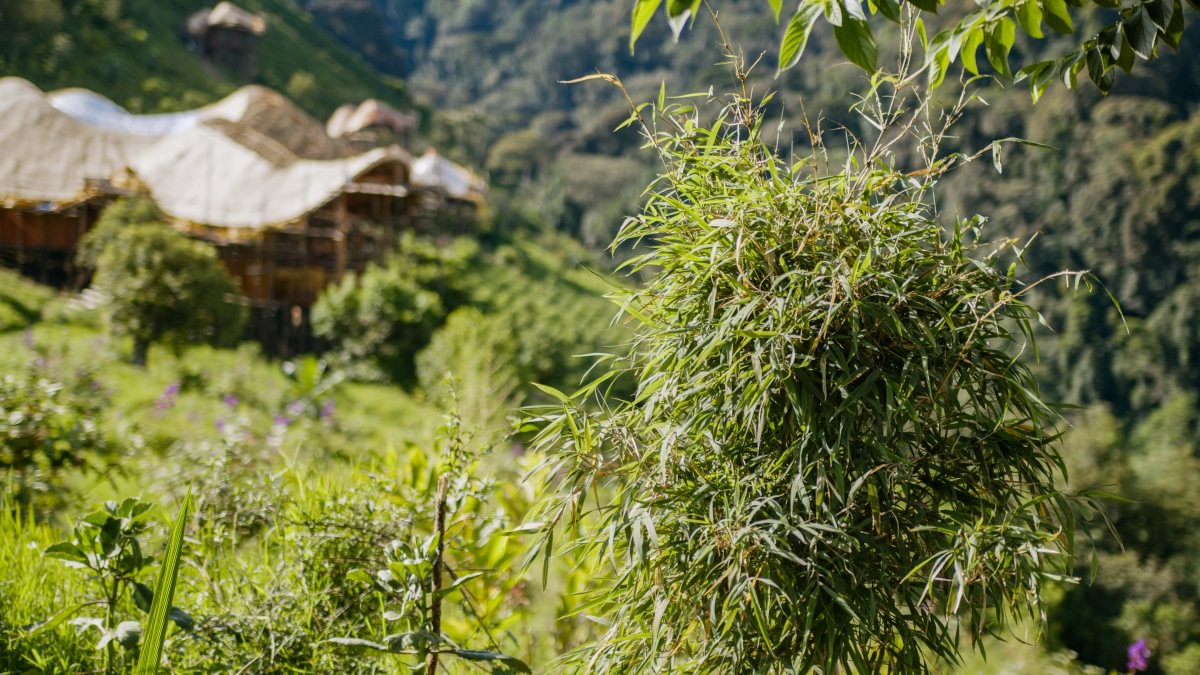
Introducing Erebero Hills and an ambitious reforestation programme in Uganda
In August, Asilia Africa will open the doors to its new and much anticipated lodge, Erebero Hills. Set high on a ridge above Bwindi Impenetrable Forest in southwestern Uganda, the lodge looks out across a sweep of dark green canopy that folds away into the valley below. In the early morning, mist settles low in the forest and the calls of turacos carry through the trees. By late afternoon, light moves slowly across the hillsides, drawing long shadows through the folds of the valley before the forest slips into dusk. It is a landscape that feels old, layered and alive.
Erebero Hills has been built into the hillside itself. Eight forest-view suites sit quietly amongst the vegetation, each with its own private deck facing the forest. The architecture follows the shape of the land rather than forcing itself upon it. Paths curve along the natural lines of the land. The curving bamboo roofs become part of the organic flow of the visible forest. Inside, the spaces are calm and open, with timber, woven textures and natural light used carefully throughout.
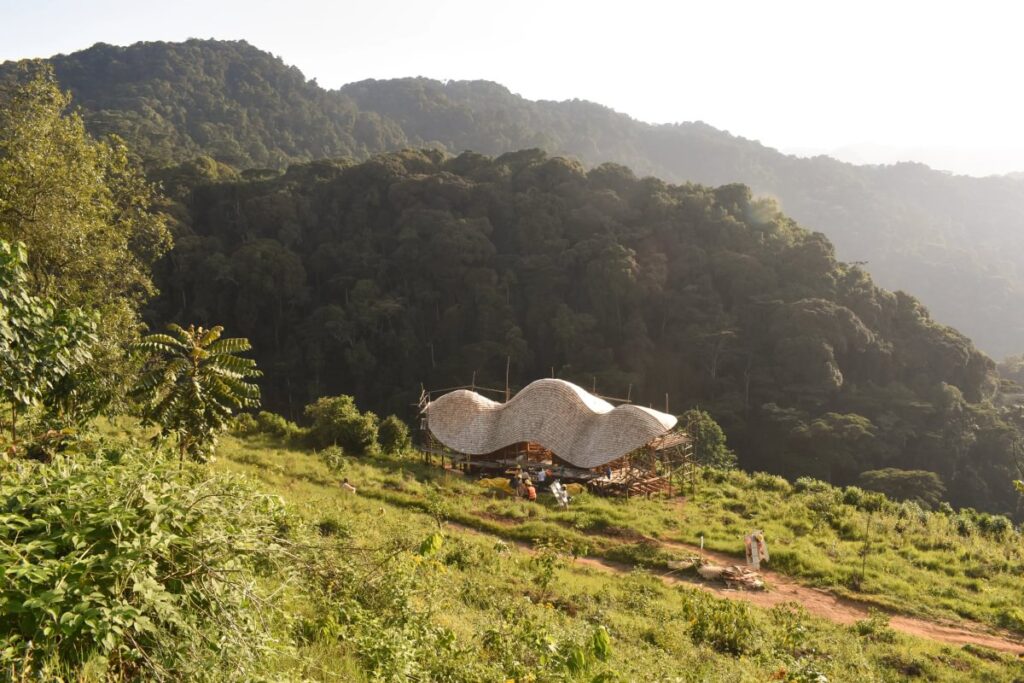
The lodge was designed in collaboration with Pablo Luna Studio, whose work often draws from the patterns and structures found in nature. There is a softness to the buildings. Curved forms echo leaves and ridgelines rather than straight edges and hard corners. Bamboo, much of it sourced locally, forms a central part of the construction. It grows quickly in this region and offers an alternative to more resource-heavy materials. Across the property, water systems, planting schemes and low-impact operations have been considered from the beginning as part of a wider approach to sustainability.
The opening of Erebero Hills also marks something larger for Asilia. For over twenty years, the company has worked across landscapes across Kenya and Tanzania where tourism, conservation and local livelihoods are closely connected. Uganda represents the next chapter in that approach.
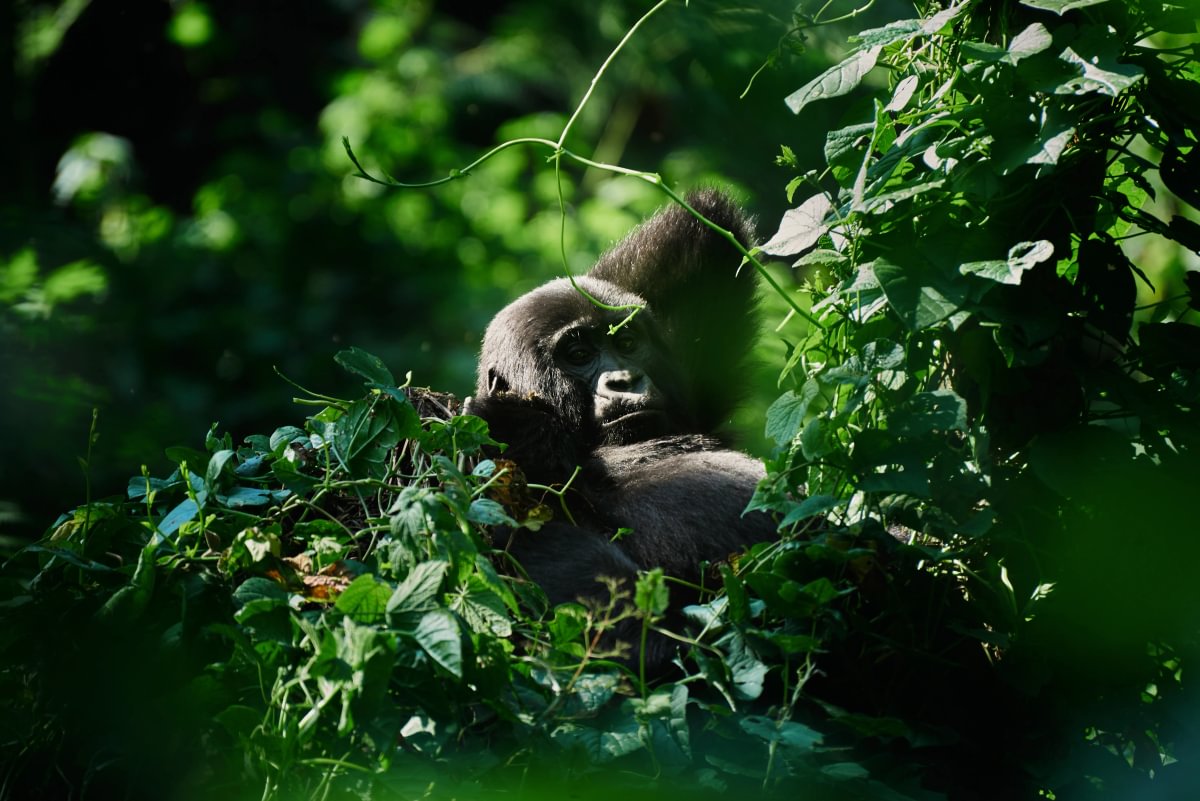
Bwindi itself remains one of Africa’s most important forests. It holds around half of the world’s remaining mountain gorillas, alongside hundreds of bird species, rare plants and primates found nowhere else. But the edges of the park tell another story. The forest boundary is abrupt. In many places the trees stop almost instantly and farmland begins. This creates pressure from both sides. Wildlife moves out into farmland. Communities live directly against the edge of the forest with little transition between cultivated land and protected habitat. There are few buffer zones and almost no ecological corridors.
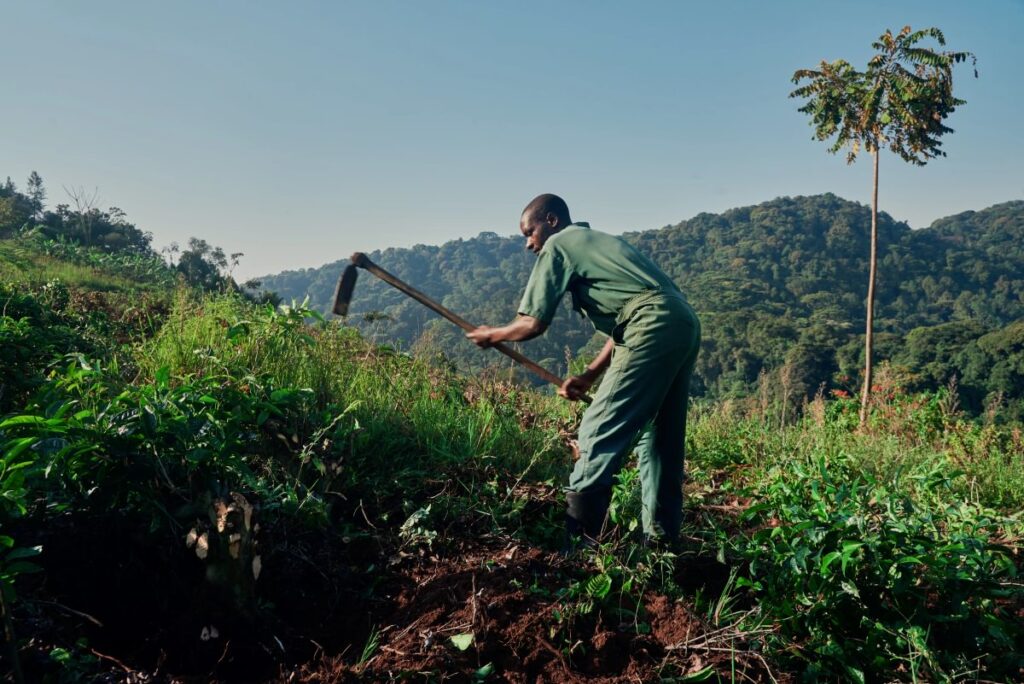
Around Erebero Hills, Asilia and its partners have started a long-term programme to restore indigenous forest on former tea estate land bordering the park. The hills here were once part of a far larger belt of montane forest stretching beyond the current boundaries of Bwindi. The hope is to slowly change the shape of the landscape again over the coming decades, allowing native vegetation to return to slopes now dominated by exhausted farmland and isolated pockets of scrub.
The land itself presents challenges. Years of tea cultivation altered the soil structure and there is little precedent for restoring forest at scale in conditions like these. Around Erebero Hills, the work is focused on testing how degraded land can realistically be brought back into forest over the long term, laying the foundations for larger-scale restoration in the future. Rather than relying on one intensive approach, different methods are being trialled across the landscape. In some areas, native species are planted amongst selectively removed tea rows to accelerate natural regeneration, while in others existing tea plants are retained temporarily to suppress weeds and protect young seedlings.
Another approach focuses on building outward from isolated mature trees already surviving within the old plantations, allowing small pockets of regeneration to slowly reconnect across the hillsides over time. To date, nearly 30,000 native seedlings representing more than 48 species have already been planted and monitored across the site.
The conversations surrounding the forest are equally complex. Bwindi is also the ancestral homeland of the Batwa people, who lived within these forests for generations before being displaced when the national park was created in 1991. Many families lost not only land, but access to culture, livelihoods and traditional knowledge tied directly to the forest itself.
Today, discussions around restoration include questions far beyond ecology. Through ongoing consultation and FPIC processes, communities are helping shape what this landscape could become in the future, and how to support livelihoods and create opportunity for the people who call it home. Early conversations with Batwa communities have focused on access to forest space for cultural education, storytelling and the passing of knowledge between generations.
While Erebero Hills will be complete and ready for guests in just a few months’ time, its presence here is part of a much longer-term project rooted in listening, restoration and the slow rebuilding of connection between people, land and forest.
Explore Erebero Hills HERE